
Tempo Softwares
Tempo Softwares
Tempo Softwares
2024 - 2025
How Behavioral Psychology Generated $1.7M in Cross-Sell Revenue
How Behavioral Psychology Generated $1.7M in Cross-Sell Revenue
How Behavioral Psychology Generated $1.7M in Cross-Sell Revenue
MY ROLE
Sr. Growth Designer
Collaboration
Growth PM, Engineering, Analytics
TIMELINE
3 Weeks from launch
PRODUCT
Timesheets x Capacity Planner
TOOLS
Figma, Jira, Amplitude
The Expansion Problem
The Expansion Problem
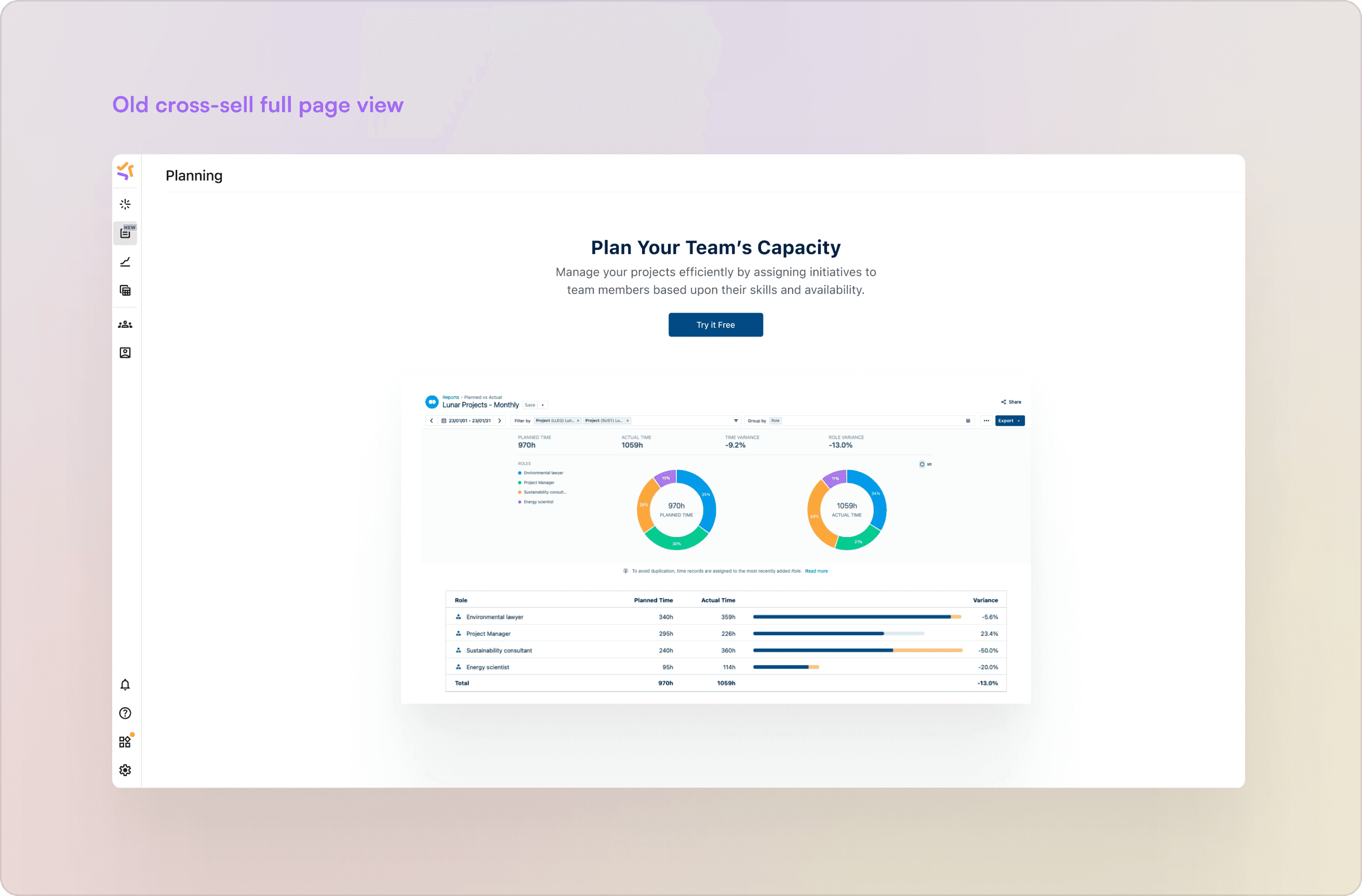
Tempo's business model relies on current Timesheets users finding and using related products like Capacity Planner. However, we faced a conversion issue: users had to leave the app, go to the Atlassian Marketplace, search for the product, understand its benefits, and learn how to start a trial, all while being away from their usual tasks.
As a result, we saw many users leaving the marketplace, losing trial requests, and non-admin users not knowing how to show interest. Our first solution, a special landing page within Timesheets, worked at first, but conversion rates began to drop. We needed a solution that was more integrated, less disruptive, and aware of user permissions.
Tempo's business model relies on current Timesheets users finding and using related products like Capacity Planner. However, we faced a conversion issue: users had to leave the app, go to the Atlassian Marketplace, search for the product, understand its benefits, and learn how to start a trial, all while being away from their usual tasks.
As a result, we saw many users leaving the marketplace, losing trial requests, and non-admin users not knowing how to show interest. Our first solution, a special landing page within Timesheets, worked at first, but conversion rates began to drop. We needed a solution that was more integrated, less disruptive, and aware of user permissions.
The impact
The impact
Strategic Shift: From Destination to Discovery
Strategic Shift: From Destination to Discovery
I led the redesign from a separate landing page to a modal that appears directly in the Timesheets calendar view. The idea was that if we show the Capacity Planner when users are focused on resource planning, while they log time and check team schedules, we'd engage them when they're most interested without making them leave their current task.
Now, there's a constant "Plan Smarter" button at the top that uses a colorful gradient to catch attention without looking like an ad. When clicked, it opens a pop-up that keeps users in their calendar while offering them this new feature.
I led the redesign from a separate landing page to a modal that appears directly in the Timesheets calendar view. The idea was that if we show the Capacity Planner when users are focused on resource planning, while they log time and check team schedules, we'd engage them when they're most interested without making them leave their current task.
Now, there's a constant "Plan Smarter" button at the top that uses a colorful gradient to catch attention without looking like an ad. When clicked, it opens a pop-up that keeps users in their calendar while offering them this new feature.
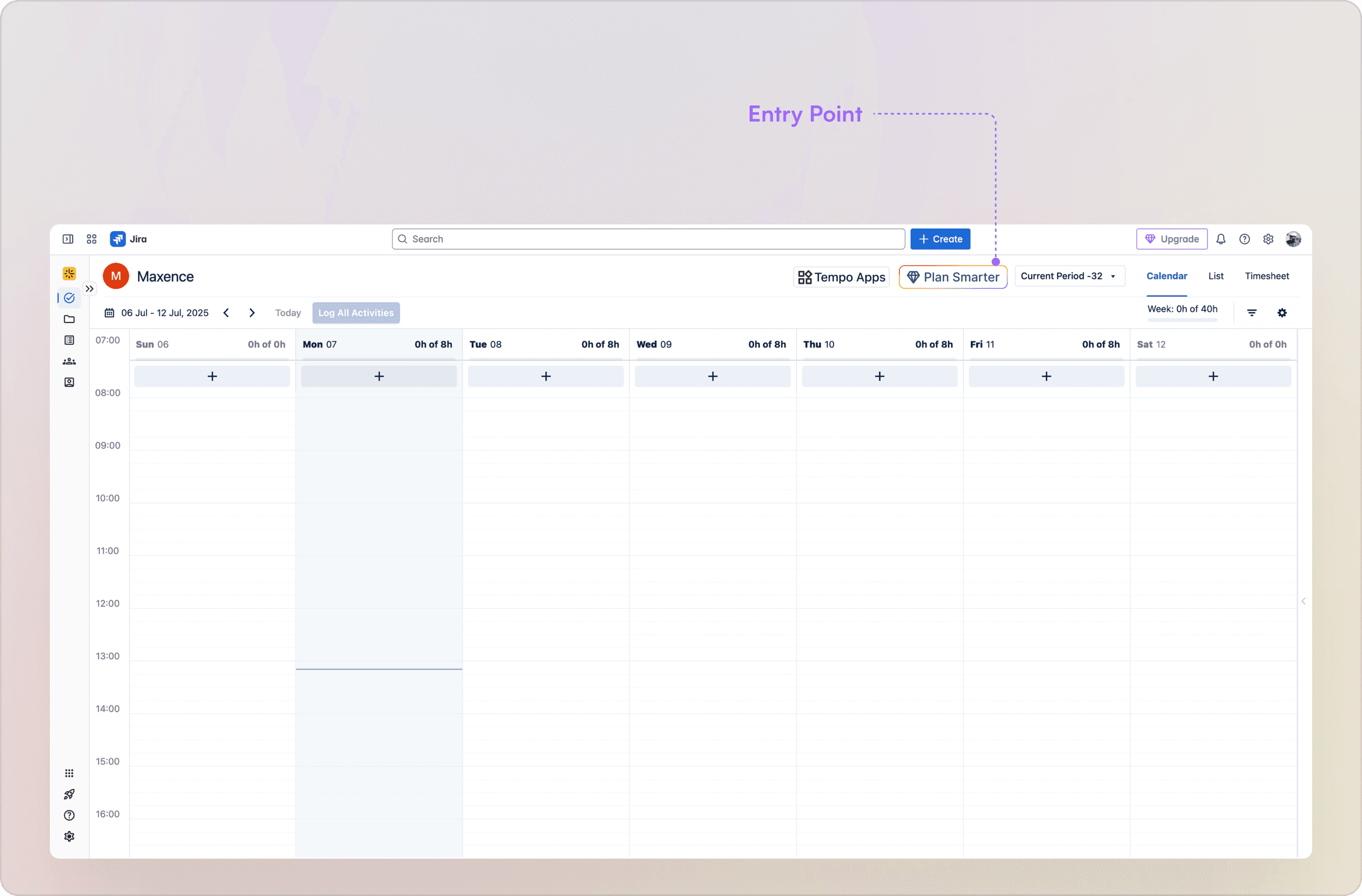
The Tempo Timesheets calendar shows the weekly work view. In the top-right corner, next to "Tempo Apps," there's a bright "Plan Smarter" button with a rainbow background and a sparkle icon. This button is placed right in the user's workflow, so they don't have to leave the calendar. Its design makes it easy to see without being annoying, which helps keep user trust while encouraging them to explore new features.
The Tempo Timesheets calendar shows the weekly work view. In the top-right corner, next to "Tempo Apps," there's a bright "Plan Smarter" button with a rainbow background and a sparkle icon. This button is placed right in the user's workflow, so they don't have to leave the calendar. Its design makes it easy to see without being annoying, which helps keep user trust while encouraging them to explore new features.
Designing for Permission Hierarchies
Designing for Permission Hierarchies
The main design challenge was not the modal itself, but dealing with Tempo's admin-controlled trial system. Non-admin users can't start trials on their own, even though they often see the need for more tools. I had to create two pathways that honored user permissions while still empowering everyone.
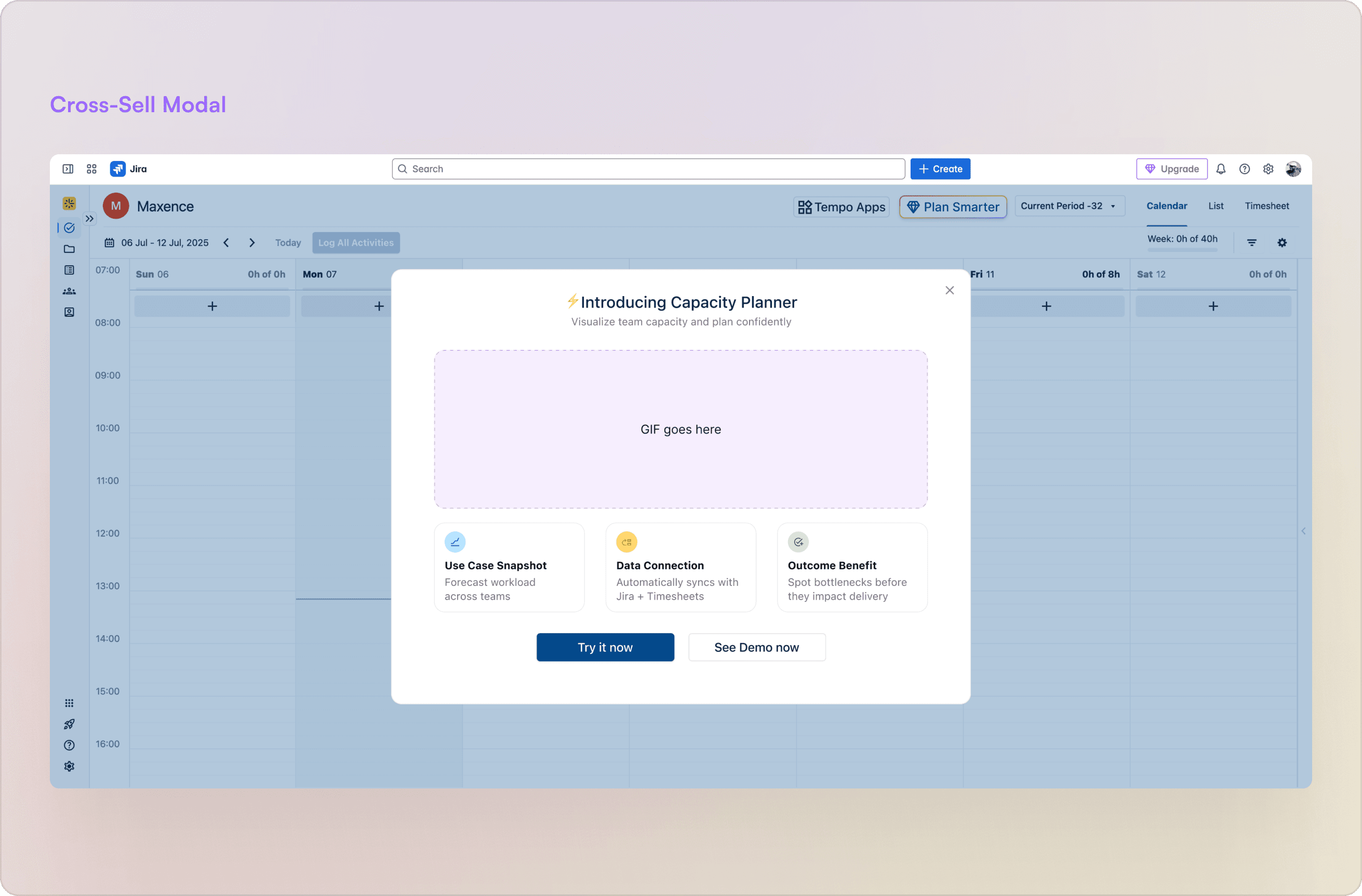
The modal highlights Capacity Planner's benefits using three icon-based cards: "Forecast workload across teams," "Automatically syncs with Jira + Timesheets," and "Spot bottlenecks before they affect delivery." Above these, there's a space for an animated GIF that shows the product in action without needing users to click away.
The call-to-action (CTA) strategy varies by user role. The main action, "Try it now", starts either a trial request for non-admins or directly activates the trial for admins. The secondary button, "See Demo now," offers a low-commitment way to explore. This dual-CTA strategy boosted engagement by giving users options without overwhelming them.
The main design challenge was not the modal itself, but dealing with Tempo's admin-controlled trial system. Non-admin users can't start trials on their own, even though they often see the need for more tools. I had to create two pathways that honored user permissions while still empowering everyone.
The modal highlights Capacity Planner's benefits using three icon-based cards: "Forecast workload across teams," "Automatically syncs with Jira + Timesheets," and "Spot bottlenecks before they affect delivery." Above these, there's a space for an animated GIF that shows the product in action without needing users to click away.
The call-to-action (CTA) strategy varies by user role. The main action, "Try it now", starts either a trial request for non-admins or directly activates the trial for admins. The secondary button, "See Demo now," offers a low-commitment way to explore. This dual-CTA strategy boosted engagement by giving users options without overwhelming them.
Impact: $1.7M Projected ARR in 3 Weeks
Impact: $1.7M Projected ARR in 3 Weeks
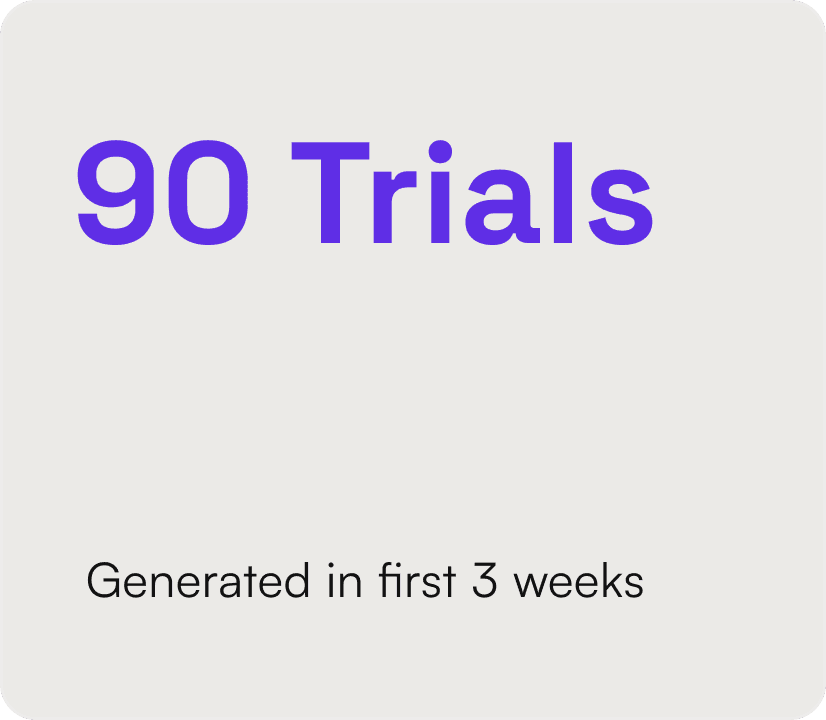
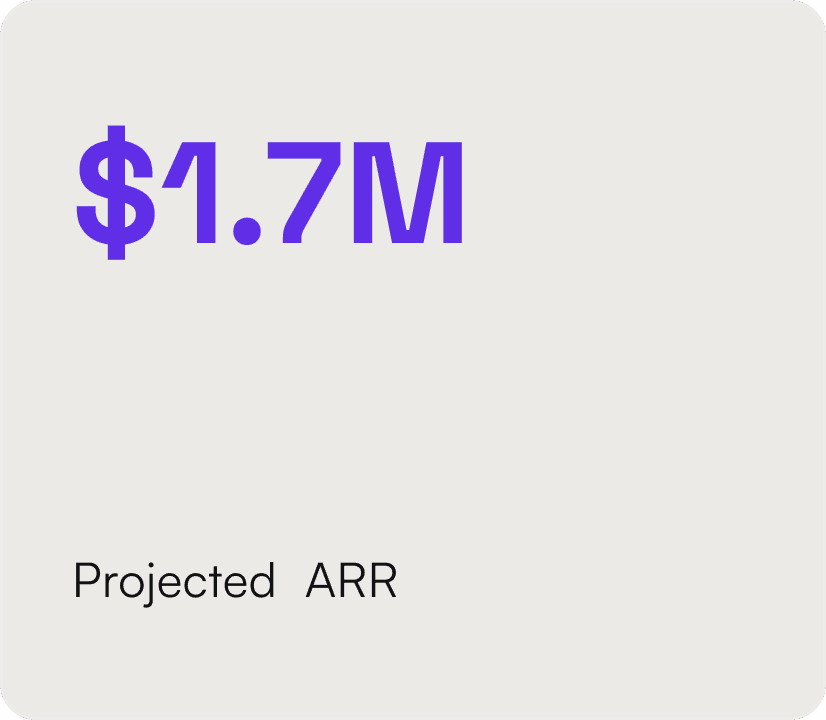
In just three weeks after launch, the modal led to 90 trials with a projected $142,625 in monthly revenue, translating in a total of $1.7M over a year. We also removed the Marketplace friction, allowing users to explore products within Tempo, which lowered bounce rates.
The modal framework I created is now being used for other Tempo products, enhancing our cross-selling efforts. By making expansion moments relevant and user-friendly, we improved Tempo's growth strategy while maintaining a good user experience.
In just three weeks after launch, the modal led to 90 trials with a projected $142,625 in monthly revenue, translating in a total of $1.7M over a year. We also removed the Marketplace friction, allowing users to explore products within Tempo, which lowered bounce rates.
The modal framework I created is now being used for other Tempo products, enhancing our cross-selling efforts. By making expansion moments relevant and user-friendly, we improved Tempo's growth strategy while maintaining a good user experience.
What I Learned About Growth Design
What I Learned About Growth Design
This project showed me that good growth design isn't about being pushy, it's about timing and understanding users' needs. The modal worked well because it showed up when users were already thinking about planning resources. The dual-CTA approach recognized that users discover things at different paces.
Most importantly, I learned that growth strategies need to adapt to how organizations work. Non-admin users may not buy directly, but they can influence decisions. Providing them a clear way to request access helps turn them into advocates, which can be more effective than direct sales.
This project showed me that good growth design isn't about being pushy, it's about timing and understanding users' needs. The modal worked well because it showed up when users were already thinking about planning resources. The dual-CTA approach recognized that users discover things at different paces.
Most importantly, I learned that growth strategies need to adapt to how organizations work. Non-admin users may not buy directly, but they can influence decisions. Providing them a clear way to request access helps turn them into advocates, which can be more effective than direct sales.